
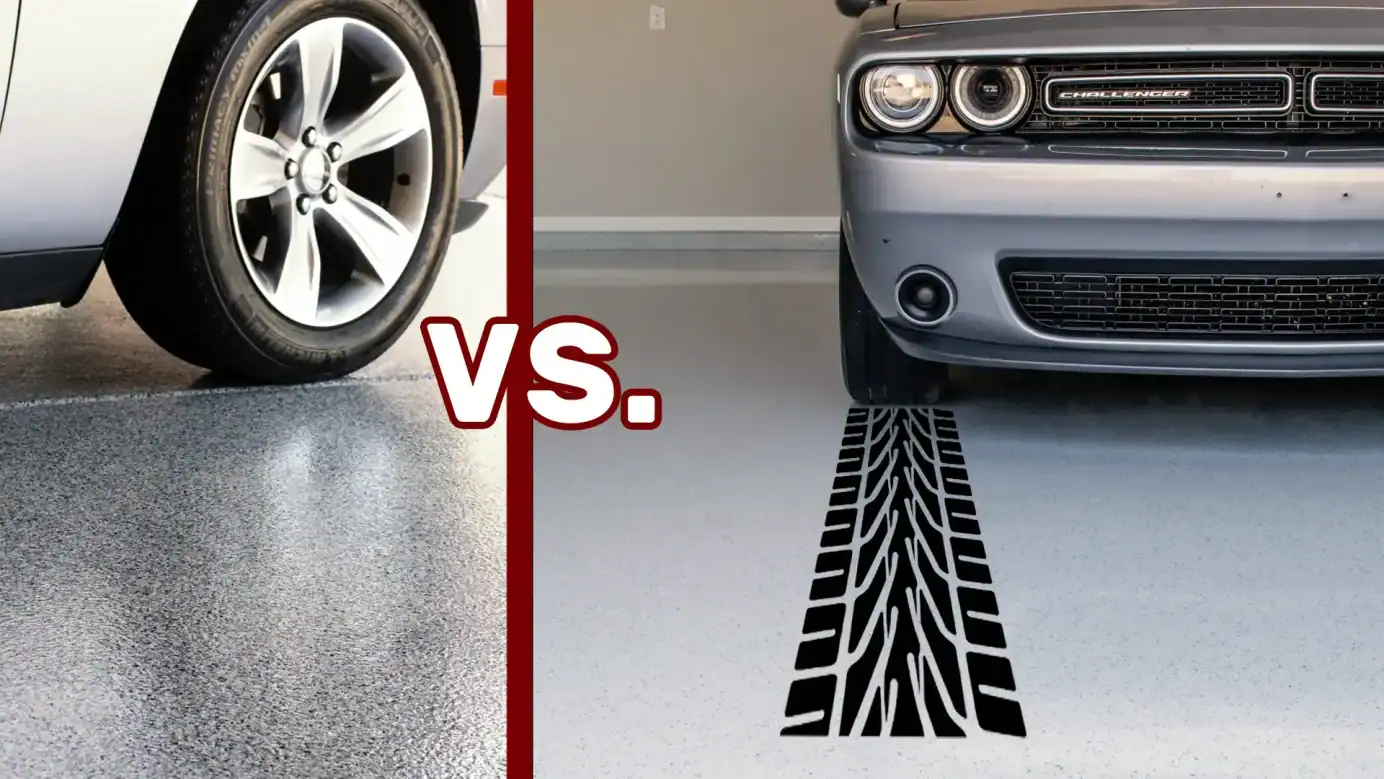
Every time you park your car, something happens that you cannot see. No spills, no impact, no obvious damage. But over time, your floor begins to change. One of the invisible threats is hot tire transfer. A professionally installed polyaspartic floor coating is designed to resist it, but only when the system beneath it is built correctly.
Heat, Pressure, and What Your Tires Leave Behind
Car tires contain plasticizers that keep rubber flexible. As tires heat up during driving, these softening agents migrate to the surface of the tire.
When you park, those plasticizers transfer into the topcoat of the garage floor coating below. The effects are gradual but damaging. Discoloration, surface tackiness, and eventually peeling or failure.
Why Thin Coatings Fail Quietly Over Time
Many 1-day garage floor coatings rely on thin, less-than-100%-solids, quick-cure polyurea or polyaspartic layers to create their coating systems. This includes a thin polyurea-polyaspartic layer applied direct-to-concrete (bad idea) and a single thin, clear topcoat. Although “1-day” coatings look great at first, they lack the structure needed to handle real-world conditions like (moisture vapor transmission and) hot tire transfer.
As heat and pressure are applied repeatedly, poor-quality top coats can begin to weaken. And, without the proper direct-to-concrete base layer, coatings are left exposed to both moisture vapor and surface stress, compromising adhesion from the start.
By the time visible damage appears, the system has already started to fail beneath the surface.
How a 2-Day Polyaspartic Floor Coating Fights Back
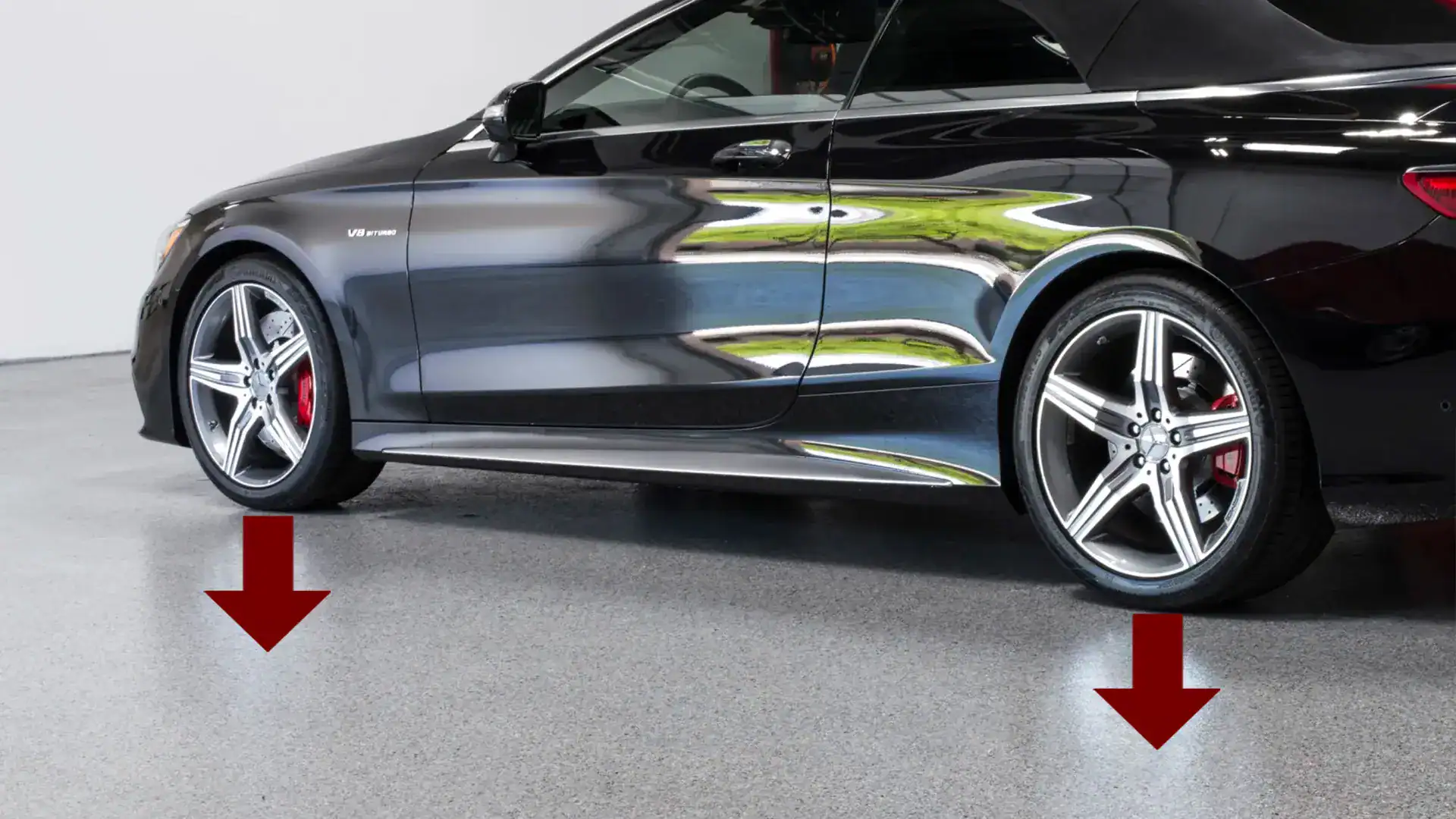
At Garage Floor Coating of Nashville, we install a quality 2-day system to create long-term durability. Our system depends on proper layering and quality 100%-solids coatings.
Day one begins with mechanical grinding to open the concrete and ensure adhesion. A high-build (read “thick”), moisture-mitigating, 100%-solids epoxy base coat is applied and allowed to cure slowly. A full flake broadcast is embedded into this base layer for strength and texture. We allow a full day (overnight) for this to cure to allow for deep penetration of the slower-curing, moisture-mitigating epoxy base coat.
On Day two, we apply, not one, but two separate 100%-solids polyaspartic top coats. The dual clear topcoats create a dense, UV-stable surface that resists heat, pressure, and chemical exposure…including hot-tire transfer.
Protection You Cannot See, Performance You Can Count On
High-quality polyaspartic flooring is designed to stop damage before it becomes visible. It prevents hot tire pickup, resists staining, and maintains its appearance over time.
In Nashville’s heat and humidity, that level of protection makes a lasting difference.
If you want a floor that holds up under real conditions, it starts with choosing the right system.
Contact Garage Floor Coating of Nashville today to learn more about a polyaspartic floor coating system built to resist the invisible threat of hot tire transfer.
"*" indicates required fields